
A customer lands on your online store for the first time. They browse for two minutes, see nothing that feels relevant to them, and leave.
You never knew they were there. And they never thought about your brand again.
This happens thousands of times every month on eCommerce stores that haven't invested in personalisation. Not because their products are bad. Not because their pricing is wrong. But because the shopping experience felt generic like walking into a store where nobody noticed you walked in.
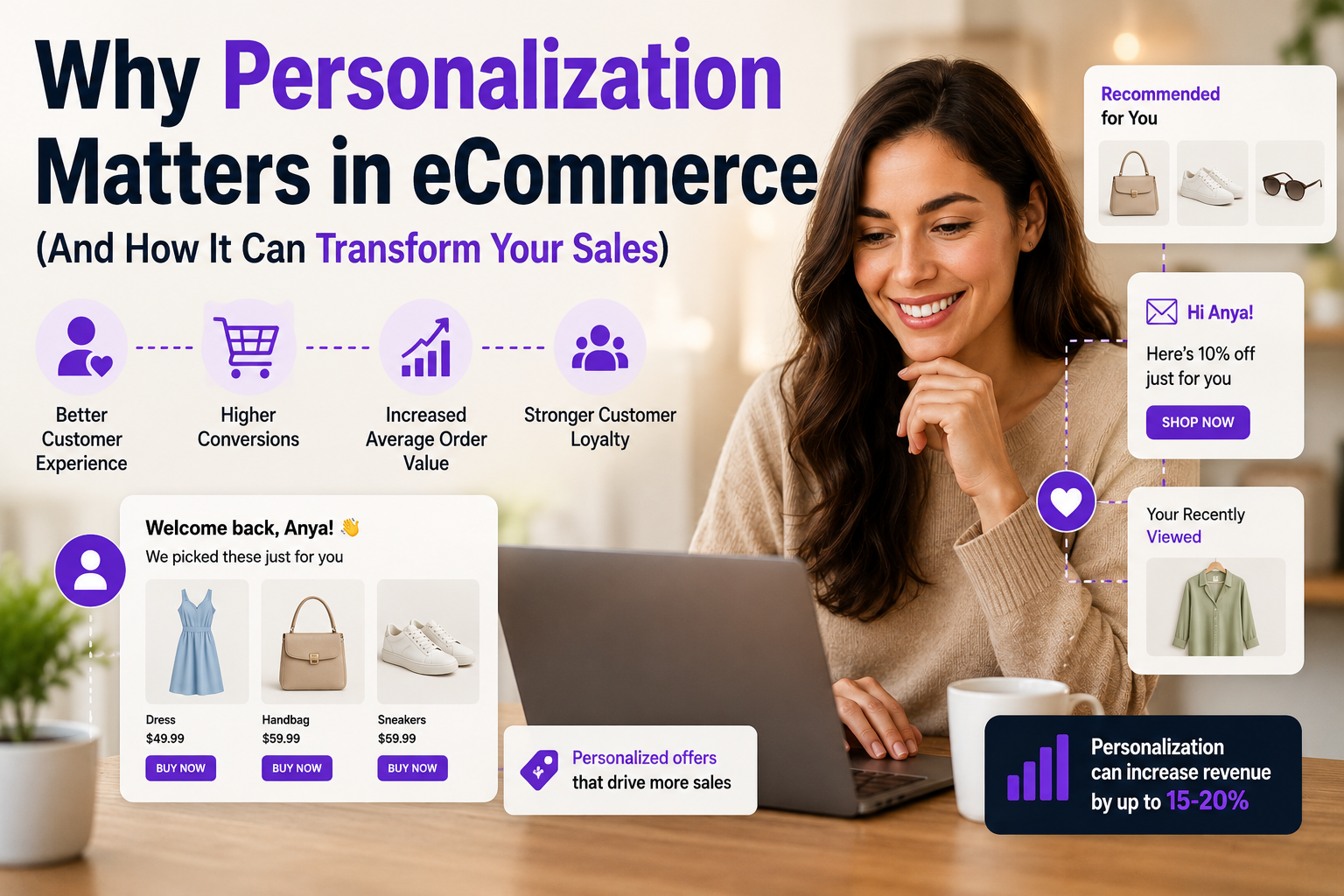
In 2026, eCommerce personalisation has moved from a "nice to have" to a core business requirement. Customers don't just want to buy products anymore. They want to feel understood, recognised, and served well. Brands that deliver this experience grow faster, retain customers longer, and spend less acquiring new buyers.
Free personalisation audit
Is your store treating every visitor the same? Our team will review your product pages, recommendation logic, and email flows to identify exactly where personalisation can increase your revenue.
Get Your Free Audit →Why generic eCommerce experiences cost you money
Think about how most eCommerce stores are structured today. Every visitor sees the same homepage. Every customer gets the same email. Every shopper is shown the same bestsellers regardless of their interests, purchase history, or browsing behaviour.
This approach made sense ten years ago when personalisation technology was expensive and difficult to implement. It makes no sense today because customers have been trained by Amazon, Netflix, and Spotify to expect experiences designed around them personally.
When your store fails to deliver that, customers don't complain. They simply leave and buy from a competitor who made them feel seen. The damage is invisible in your analytics but very real in your revenue.
The psychology behind personalised shopping
Personalisation works because of a fundamental human need: to feel recognised and understood. When a customer sees a product recommendation that perfectly matches something they were already thinking about, the brain registers a moment of trust. That trust accelerates purchasing decisions dramatically.
Conversely, generic experiences create cognitive friction. When customers must search through irrelevant products to find what they want, they lose patience quickly especially on mobile devices where attention spans are even shorter.
The stores that win long-term are not necessarily the ones with the best products. They are the ones that make every individual customer feel like the store was built for them specifically.
8 Proven personalisation strategies that transform eCommerce sales
1. Personalised product recommendations based on browse history
The most immediate personalisation win is showing customers products related to what they have already viewed on your store. A customer who spent three minutes on a product page is signalling high intent. Showing them complementary items, recently viewed products, and "customers also bought" sections based on their specific journey dramatically increases the chance of conversion.
2. Dynamic homepage content for returning customers
When a returning customer visits your store, they should not see the same homepage as a first-time visitor. AI-powered personalisation allows you to dynamically rearrange featured products, hero banners, and category highlights based on that individual's purchase and browse history.
A customer who bought running shoes last month should see sports nutrition and fitness accessories not unrelated promotions for home decor. This level of relevance reduces bounce rates and increases the probability of a repeat purchase in the same session.
3. Behaviour-triggered email flows
Generic email blasts destroy deliverability and annoy customers. Personalised behaviour-triggered emails sent based on what a specific customer did or didn't do on your site consistently outperform bulk campaigns by a factor of three to five.
Key triggers include: abandoned cart recovery, post-purchase follow-up, product replenishment reminders, browse abandonment sequences, and win-back campaigns for lapsed customers. Each email speaks directly to a specific action the customer took, which is why open and click rates are dramatically higher.
4. Personalised search results
Most eCommerce stores treat search as a simple keyword-matching function. But personalised search goes further it adjusts result rankings based on the individual customer's past behaviour, purchase history, and price range preferences.
A customer who consistently buys premium products should see premium options ranked first. A customer with a history of budget purchases should see value options first. This alignment between expectation and result reduces search abandonment significantly.
5. Location-based personalisation
Showing customers products, promotions, and shipping information relevant to their specific location builds immediate trust. A customer in Mumbai should see relevant delivery timelines, local currency formatting, and seasonal products appropriate to their climate and cultural context.
This type of contextual relevance signals to customers that your brand understands them which is the foundation of every repeat purchase relationship.
6. Purchase history-based upsells
Customers who have already bought from your store are your highest-value audience. Personalised upsells based on what they previously purchased the natural next product, a complementary accessory, or a higher-tier version of something they own convert at rates three to four times higher than cold traffic promotions.
Our landing page optimisation service helps you build personalised post-purchase pages that maximise the value of every transaction.
7. Personalised loyalty rewards
Generic discount codes are easy to ignore. Personalised loyalty rewards a birthday offer for a specific product category, an exclusive early-access invite based on a customer's VIP status, or a free gift matched to their purchase history create emotional connection that generic promotions simply cannot replicate.
8. Social proof personalised by segment
Showing reviews and testimonials from customers similar to the visitor same location, same product category, same use case increases purchase confidence dramatically. A first-time buyer in Ahmedabad converting after reading a review from another Ahmedabad customer is not a coincidence. It is targeted social proof working exactly as designed.
Our A/B testing & analytics service helps you test which social proof formats drive the highest conversion lift for your specific audience segments.
Personalisation is not optional in 2026
The eCommerce brands that will dominate the next three years are not necessarily the ones with the largest ad budgets. They are the ones that use data intelligently to make every individual customer feel like the store was designed for them personally.
Personalisation reduces bounce rates, increases conversion rates, improves AOV, strengthens retention, and builds the kind of brand loyalty that no discount code can create. It is the highest-leverage investment available to any eCommerce business right now.
Fashion brand from high bounce rate to personalised shopping journey
A fashion eCommerce brand came to Satyanam struggling with a 78% bounce rate and low repeat purchase frequency. Customers were visiting but not finding relevant products quickly enough. We implemented personalised homepage content, behaviour-triggered email flows, and dynamic recommendation blocks across key pages. Within 60 days, bounce rate dropped by 31% and repeat purchase rate increased by 24%.
View all case studies →Customers rarely stay loyal to stores that treat them as anonymous visitors. They return to brands that remember them, understand their preferences, and consistently show them products that are actually relevant. That is personalisation working exactly as it should.
Want to personalise your eCommerce store experience?
At Satyanam, we build Shopify and nopCommerce solutions with behaviour-driven personalisation, AI recommendation engines, and automated email flows that turn one-time visitors into loyal buyers.
Talk to Our eCommerce Experts →Frequently asked questions