
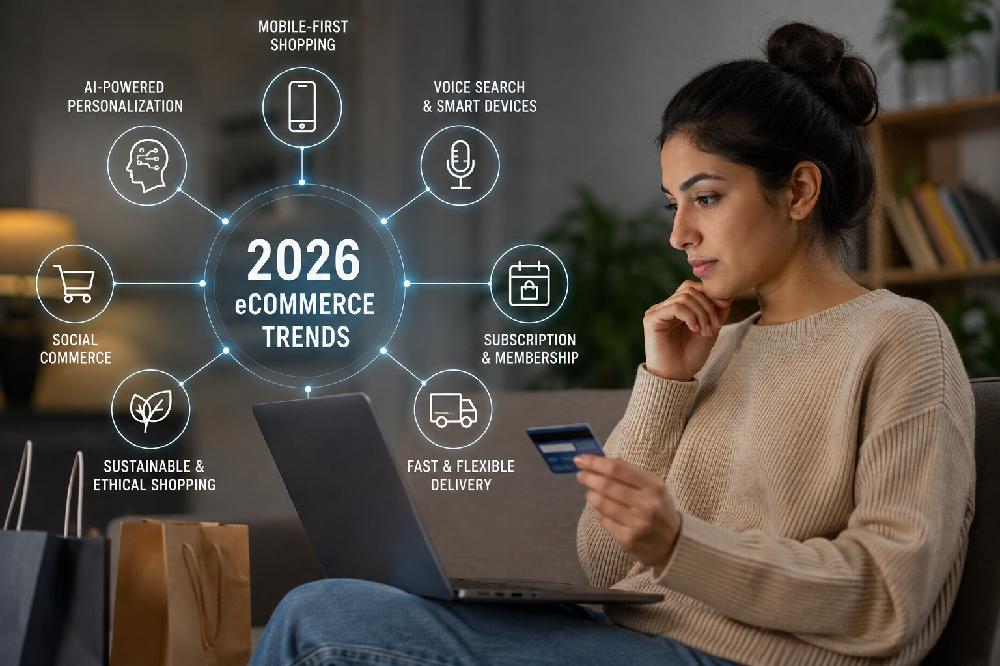
Something shifted quietly in consumer behaviour over the last 18 months and most eCommerce businesses I talk to felt it before they could explain it.
Ads that used to convert stopped working as well. Customers were browsing more and buying less. Return rates in some categories climbed. Loyal customers started skipping a purchase cycle without any obvious reason.
The easy explanation is economic pressure. And cost consciousness is real. But the deeper answer is that how people shop online has changed in ways that aren't reversible, not because of the economy, but because technology and accumulated experience have raised the bar for what a good shopping experience looks and feels like.
The stores that are growing in 2026 adjusted to that new bar. The ones that aren't are often running the same store architecture, the same checkout flow, and the same product presentation they had in 2022 and wondering why conversion rates are flat.
Here are the seven shifts that explain the gap.
Not sure how your store measures up against these shifts?
We look at where your current setup is aligned with how customers actually shop in 2026 and where it isn't. Free conversation, no pitch attached.
Book a free 30-minute conversation →Seven ways customer buying behaviour changed and what to do about it
Mobile became the primary shopping environment, not a secondary one
This isn't new information but most stores are still treating mobile as a smaller version of their desktop experience rather than designing for it first. The distinction matters because mobile shopping behaviour is fundamentally different. Customers browse in shorter sessions, tap instead of click, scroll past anything that requires reading effort, and abandon checkout the moment it feels complicated.
A store converting at 3.5% on desktop and 1.2% on mobile isn't experiencing a mobile problem. It's experiencing a design problem that only shows up on mobile, the checkout flow, the product page layout, the image sizes, the button placements. All of these need to be evaluated on the actual devices your customers use, not the laptop your team works from.
The practical test: open your store on a mid-range Android phone on mobile data. Time how long it takes to load. Try adding to cart and checking out. Every point of friction you notice is a conversion you're currently losing at scale.
Personalisation moved from impressive to expected
A few years ago, showing a returning customer a recommendation based on their previous browse felt sophisticated. In 2026, customers notice when a store doesn't do it. The baseline expectation is that a brand you've bought from before knows you bought from them and reflects that in what they show you next.
This doesn't require an expensive AI system. It requires using the purchase and browse data you already have. Post-purchase emails that recommend the next logical product. Homepage sections that adapt to returning customers. Product page sidebars that surface categories a customer has already bought from. The stores doing this well connected their eCommerce platform to their CRM and email tool so the data flows automatically instead of sitting in a database nobody can act on.
If your post-purchase email sends the same generic newsletter to a customer who just bought as it sends to someone who hasn't bought in six months that's the personalisation gap in practice.
Page speed became a direct revenue variable, not a technical metric
A one-second delay in load time reduces conversions by approximately 7%. On mobile, where connections are less reliable and patience shorter, the drop is often steeper. The problem in 2026 is that many Shopify stores are significantly slower than they should be not because of bad infrastructure, but because of accumulated apps, uncompressed images, and third-party scripts that each add a small delay. Individually manageable. Collectively, they can add 3–4 seconds to a page load that should take under 1.5.
Google's Core Web Vitals now directly affect search rankings, which means page speed affects both the traffic you receive and the conversion rate of that traffic. It's the only eCommerce metric that compounds on both sides of the funnel simultaneously. One Satyanam client dropped their load time from 5 seconds to under 1.5 - conversion rate improvement was visible within the first week, before any other changes were made.
Social commerce matured from a traffic driver into a conversion environment
For a while, social media's role in eCommerce was clear: drive awareness, generate traffic, convert on the website. That model still exists — but it's no longer the only one. Customers in 2026 increasingly complete purchases through shoppable posts and creator-recommended links without visiting a product page at all. They discover, evaluate, and buy within a single session inside one app.
For brands, this means the product content itself, the photo, the short video, the caption needs to be sufficient to convert, not just to drive a click. A photo that looks good in a feed but provides no useful information about the product doesn't serve the commerce part of social commerce. The implication isn't that every brand needs to be active across every platform. It's that the product content you create needs to work as a standalone conversion tool wherever it appears.
Subscriptions grew but so did frustration with rigid models
The subscription economy is not declining. But the type of subscription model customers tolerate has changed substantially. The brands growing subscription revenue in 2026 are the ones giving customers genuine control, pause, skip, swap, change frequency rather than a binary choice between staying subscribed and cancelling.
The research on this is consistent: a customer who pauses for six weeks and returns is worth dramatically more than one who cancels and never re-subscribes. Pause functionality reduces churn by 20–40% in most implementations. The reason most stores don't have it is that nobody made it a priority not that it's technically difficult. If you run any kind of recurring product, the flexibility of your subscription model is a more meaningful retention lever than any discount you could offer.
Customers research more before buying and trust brand claims less
The path from discovery to purchase is longer than it was three years ago, not because customers are more indecisive, but because they've learned to be more selective. They've had enough disappointing experiences with products that didn't match their online presentation to approach purchase decisions more carefully.
What this means practically: social proof carries more weight than brand copy. A product page with 200 customer reviews, real photos, and fit notes from actual buyers consistently outperforms the same page with beautifully written brand descriptions but no external validation. The stores that understand this invest in the mechanisms that generate genuine social proof post-purchase review requests with photo prompts, verified buyer badges, user-generated content not as a marketing strategy, but as evidence that the product is what it claims to be.
Operational integration became a customer experience problem, not just a back-office one
Customers in 2026 have high expectations for the accuracy and speed of operational information. They expect that a product shown as "in stock" is genuinely available. They expect that a delivery estimate is realistic. They expect that a return is processed in days, not weeks.
Most failures on these expectations are not customer service failures they are data failures. The store shows stock it doesn't have because the inventory sync between the eCommerce platform and the warehouse runs hourly instead of in real time. The delivery estimate is inaccurate because the carrier integration doesn't reflect current capacity. The businesses improving customer satisfaction most meaningfully in 2026 are the ones that invested in real-time integration between their store and their operational systems not because they care about clean data in the abstract, but because inaccurate operational data creates customer experience problems at scale. If your last 30 support tickets included any "it said in stock but wasn't" themes those are integration problems presenting as service problems.
What connects all seven of these
Reading through these trends, a pattern becomes clear. None of them require a fundamentally different product or a larger marketing budget. All of them require the same underlying thing: a store built around how customers actually behave in 2026 rather than how they behaved when the store was first set up.
What the gap looks like in practice
Store that hasn't adjusted
- Same desktop-designed pages served to 70%+ mobile traffic
- Generic post-purchase email to every customer regardless of history
- 6-second mobile load time from accumulated app scripts
- Subscription cancel-only, no pause, no skip
- Stock shown as available; warehouse disagrees
Store that adjusted to 2026
- Mobile-first checkout 2 taps with Apple Pay or Shop Pay
- Post-purchase email recommends next product based on what was bought
- Under 1.5-second mobile load, images compressed, app scripts audited
- Subscription pause and skip built in churn drops 30%+
- Real-time ERP sync store and warehouse always agree
D2C fashion startup: headless migration delivers 95+ Lighthouse score and 2.1x conversion lift
A D2C fashion startup came to Satyanam with a WooCommerce store that was slow enough to be hurting both organic rankings and paid ad performance. Their TTFB was 2.8 seconds well outside what Google's Core Web Vitals consider acceptable. Mobile conversion was significantly below desktop, and the gap was widening as more of their traffic came through paid social campaigns on mobile devices.
Satyanam migrated them to a Next.js headless stack. TTFB dropped from 2.8 seconds to 0.4 seconds. Their Lighthouse score reached 95+. Google Ads Quality Score improved by 38% directly reducing their cost per click. The speed improvement didn't just help rankings. It made every rupee of ad spend go further because a faster store converts paid traffic at a higher rate too. Trend 3 - page speed as a revenue variable in a single client story.
View all case studies →Customer behaviour in 2026 rewards stores that are fast, accurate, relevant, and easy to use on a phone. It punishes stores that are slow, generic, unverified, and built primarily for desktop.
That's not a judgment on the brands running those stores most of them were built correctly for the moment they launched. The issue is that the moment has moved and the stores haven't moved with it.
If even two of the seven trends above described something you recognise in your own store, that's a reasonable starting point for a focused improvement project. Not a full rebuild. Not a platform migration. Just a clear-eyed look at which specific gaps are costing you the most and fixing them in order of impact.
The good news is that most of these gaps are smaller than they look from the outside.
Want to know which of these gaps your store has?
We work with Shopify, nopCommerce, and WooCommerce stores across apparel, health and wellness, retail, and B2B manufacturing. A short conversation usually surfaces the two or three things that would make the most difference. No proposal, no pressure.
Book a free 30-minute conversation →Frequently asked questions