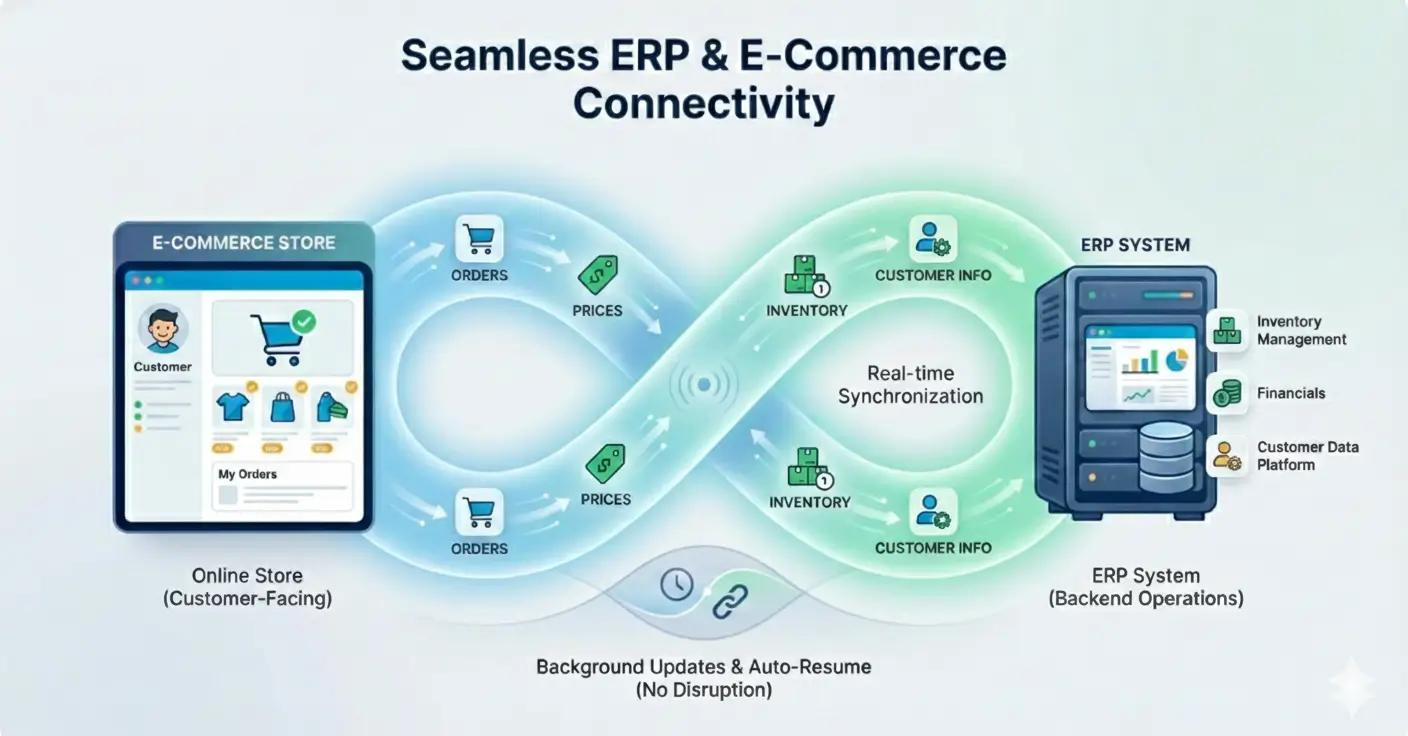
Your eCommerce store may be losing time and accuracy because your systems aren't communicating properly. From inventory mismatches and delayed orders to repeated data entry and inconsistent reports, small integration issues can quickly become operational problems. In this blog, we’ll cover "7 common signs of an eCommerce integration problem" and what businesses can do to improve data flow between their eCommerce platform, ERP, POS, warehouse, and other systems.
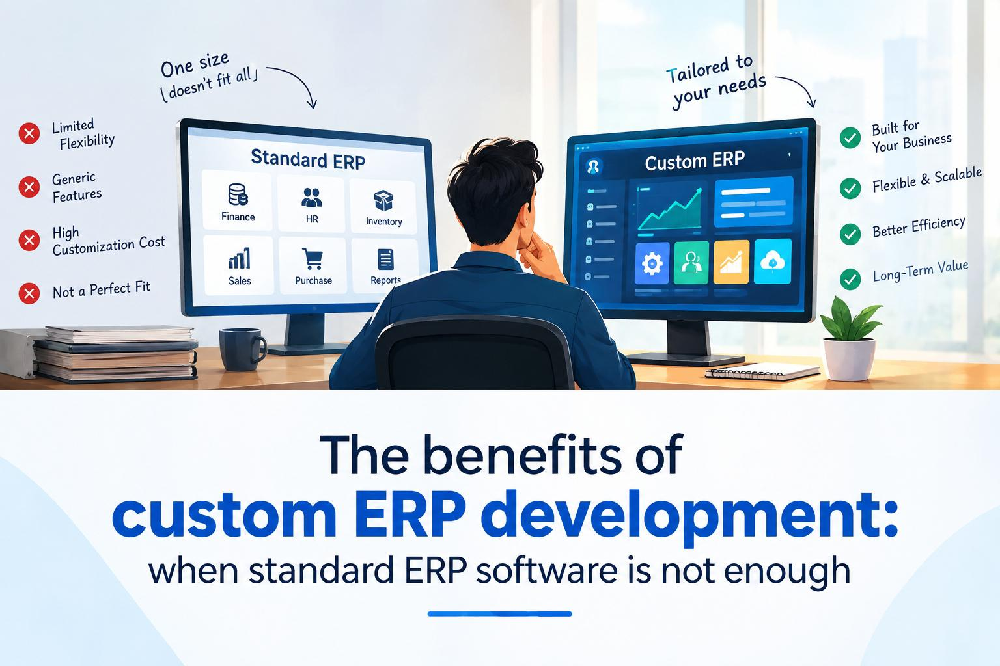
Standard ERP software works well when your business follows standard processes. But as operations become more complex, rigid workflows, limited integrations, and manual workarounds can start slowing your team down. Custom ERP development gives you a system built around how your business actually operates—connecting processes, data, and teams in one place while giving you the flexibility to grow.
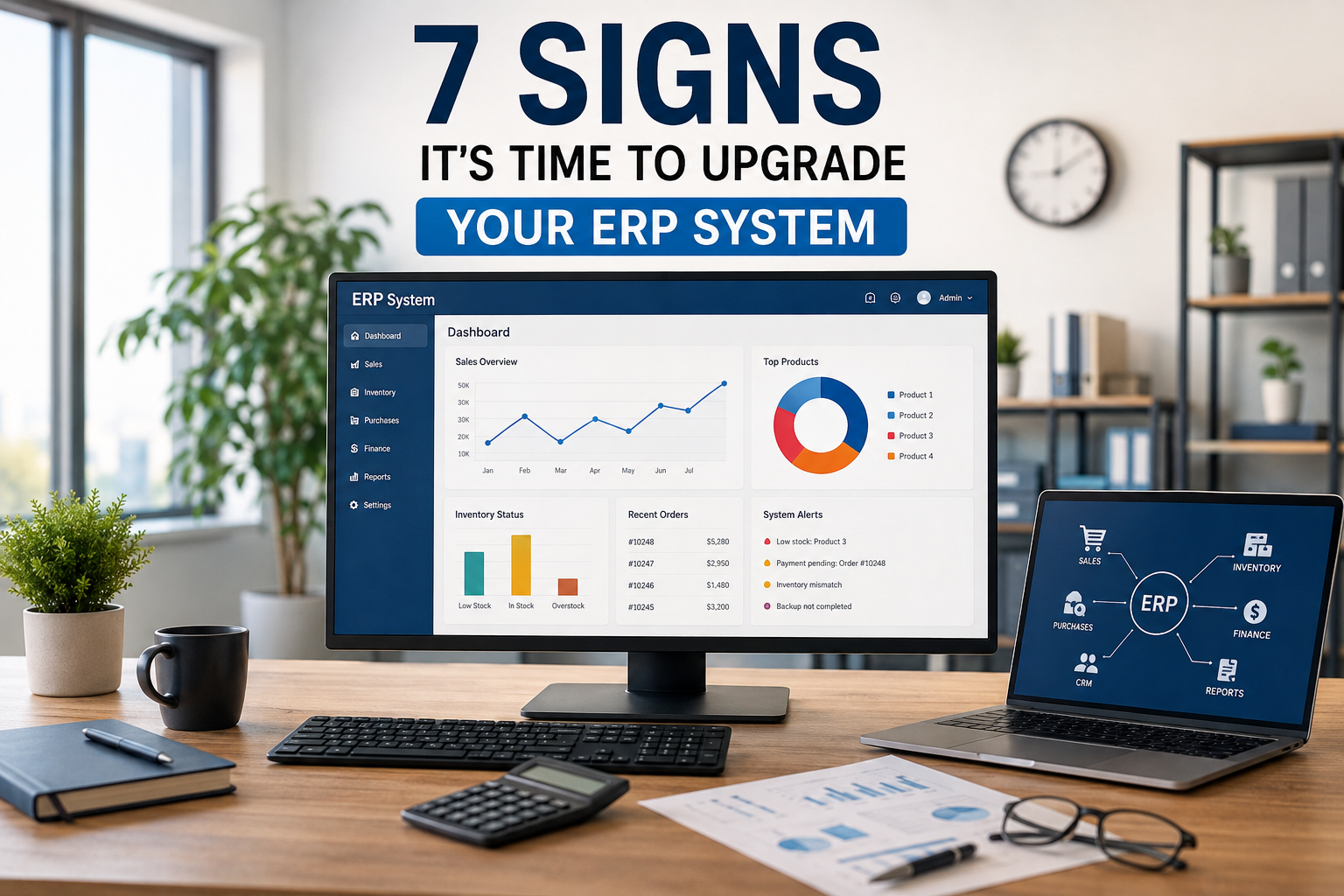
Your ERP system should make your business faster, smarter, and easier to manage—not create more manual work. If your team relies on spreadsheets, repeats data entry, struggles with reporting, or can’t connect essential business tools, it may be time for an upgrade. Here are 7 clear signs that your ERP system is holding your business back.
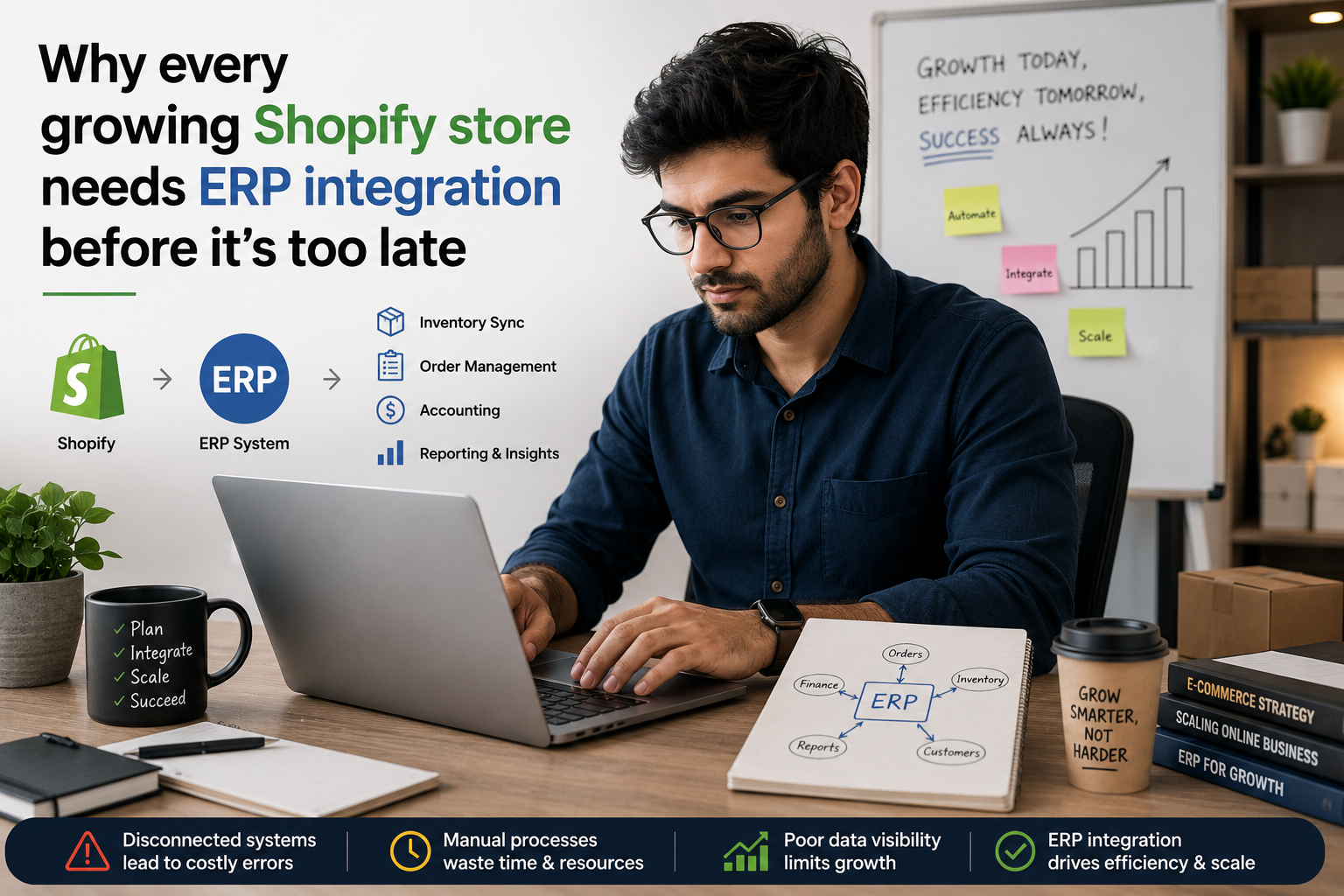
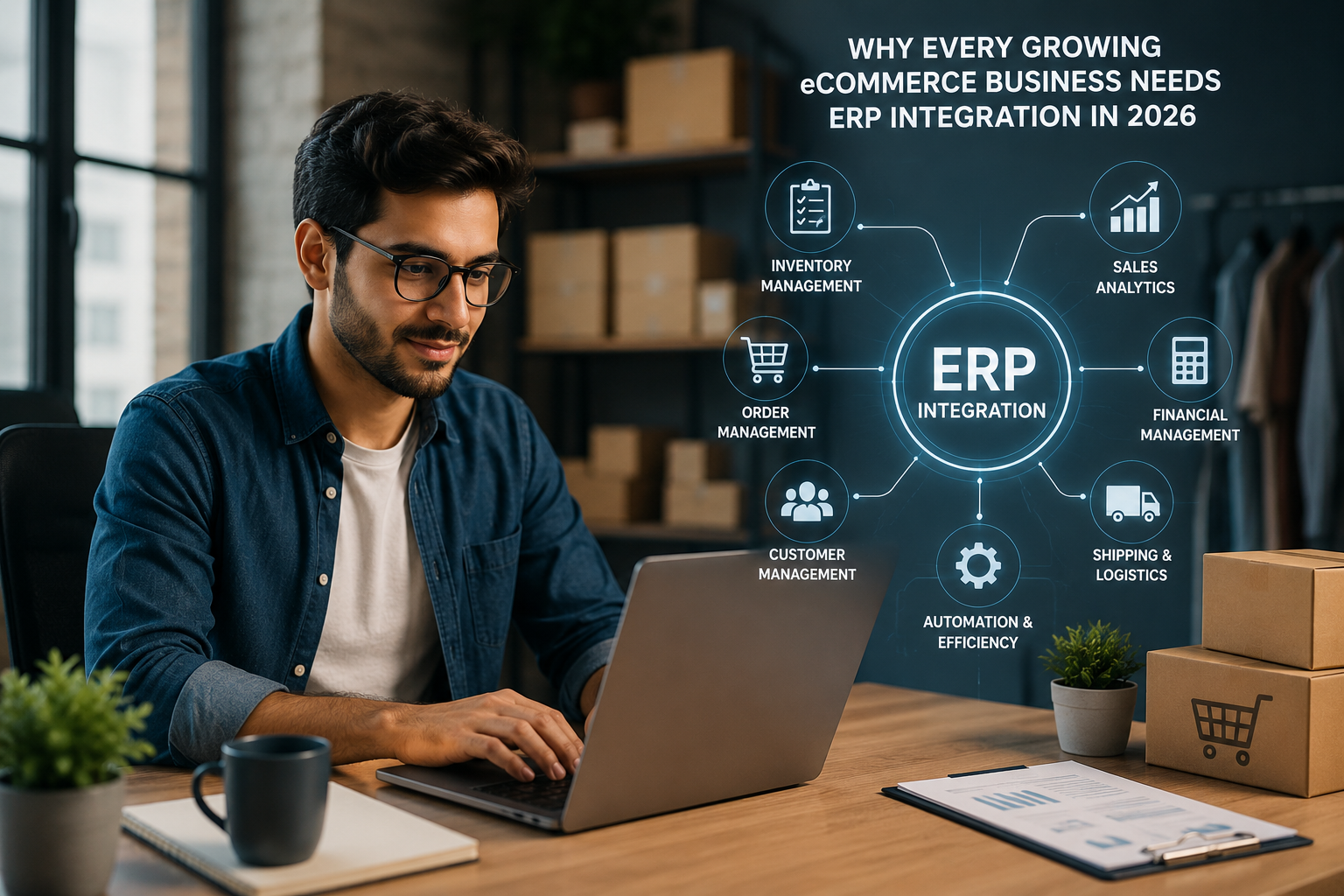
As your Shopify store grows, managing inventory, orders, accounting, and customer data across multiple systems becomes increasingly difficult. ERP integration connects these processes into one centralized platform, reducing manual work, preventing costly errors, and providing real-time business insights. By integrating ERP before operational challenges escalate, businesses can improve efficiency, scale confidently, and deliver a seamless customer experience while staying competitive in a fast-moving eCommerce market.
As your eCommerce business grows, managing orders, inventory, accounting, and customer data manually becomes increasingly complex. In this blog, you'll discover why ERP integration is essential in 2026, how it eliminates manual processes, improves operational efficiency, provides real-time business insights, and helps growing businesses scale faster with fewer errors and better customer experiences.
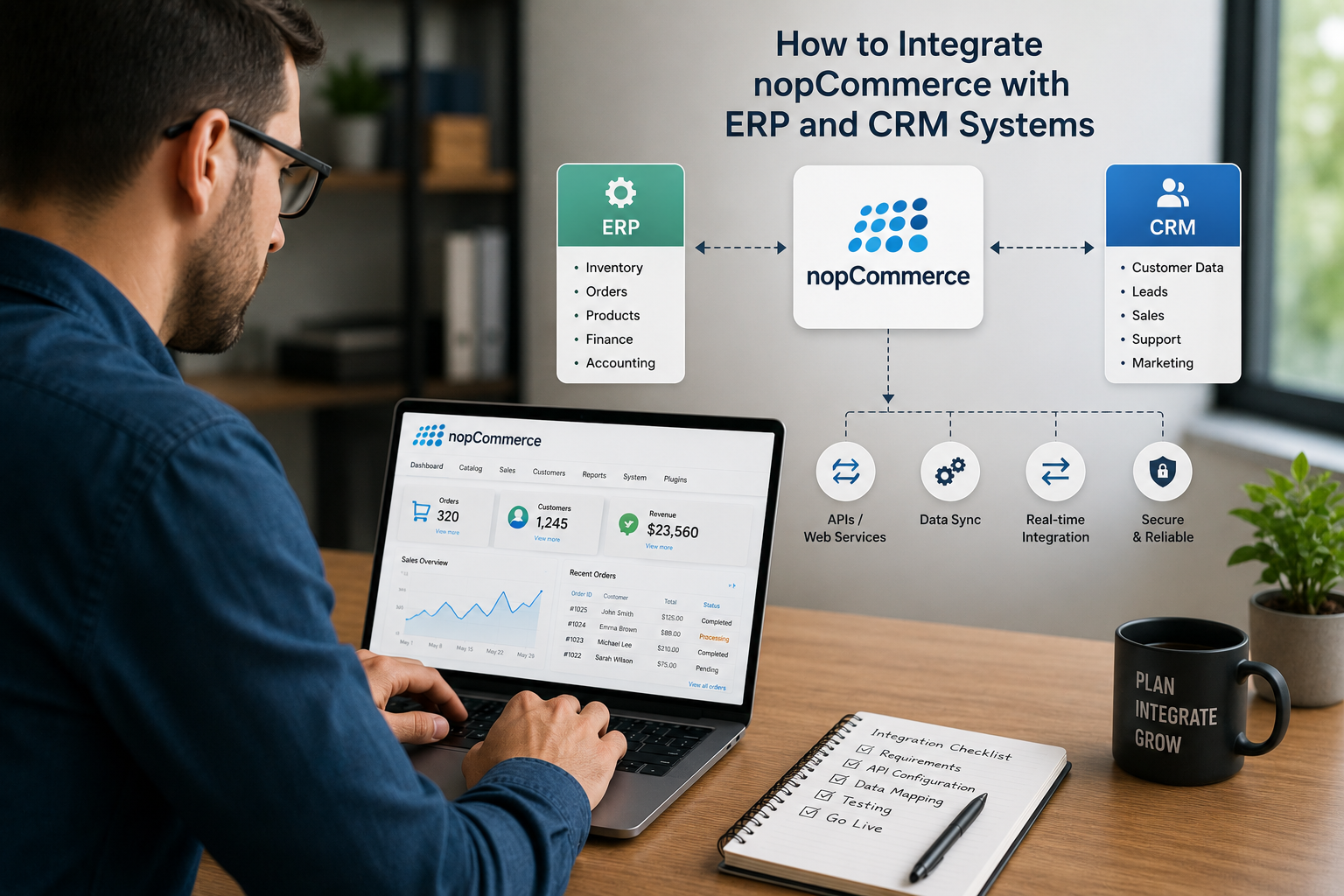
Running nopCommerce without a tight ERP and CRM connection means double data entry, mismatched inventory, and orders that fall through the cracks between your storefront and back office. Integrating nopCommerce with your ERP and CRM systems closes that gap — syncing product, inventory, order, and customer data in real time so your sales, fulfillment, and support teams are always working off the same source of truth. In this guide, we'll walk through the integration approaches, common challenges, and best practices for connecting nopCommerce to ERP and CRM platforms, along with a real client example of how this kind of integration translates into measurable business results.
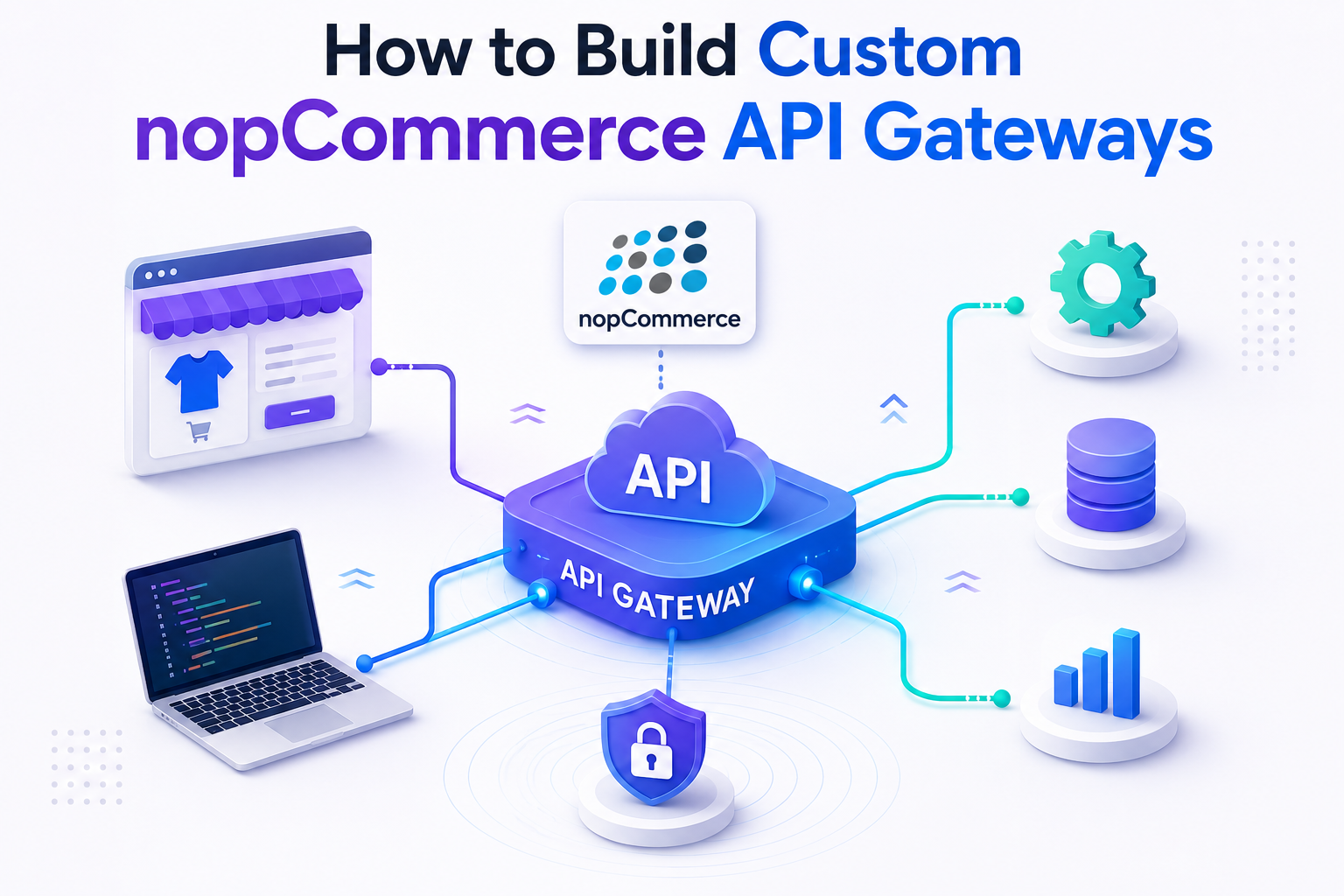
In today’s connected commerce landscape, a nopCommerce store rarely operates in isolation. It must securely communicate with payment gateways, ERPs, CRMs, mobile apps, logistics providers, and marketplaces like Amazon and Flipkart. A custom API gateway acts as a centralized layer that manages authentication, routing, security, monitoring, and integration logic between nopCommerce and these external systems. By building a tailored API gateway, businesses gain better control over data flow, improve performance, enhance security, and create a scalable foundation for future growth.