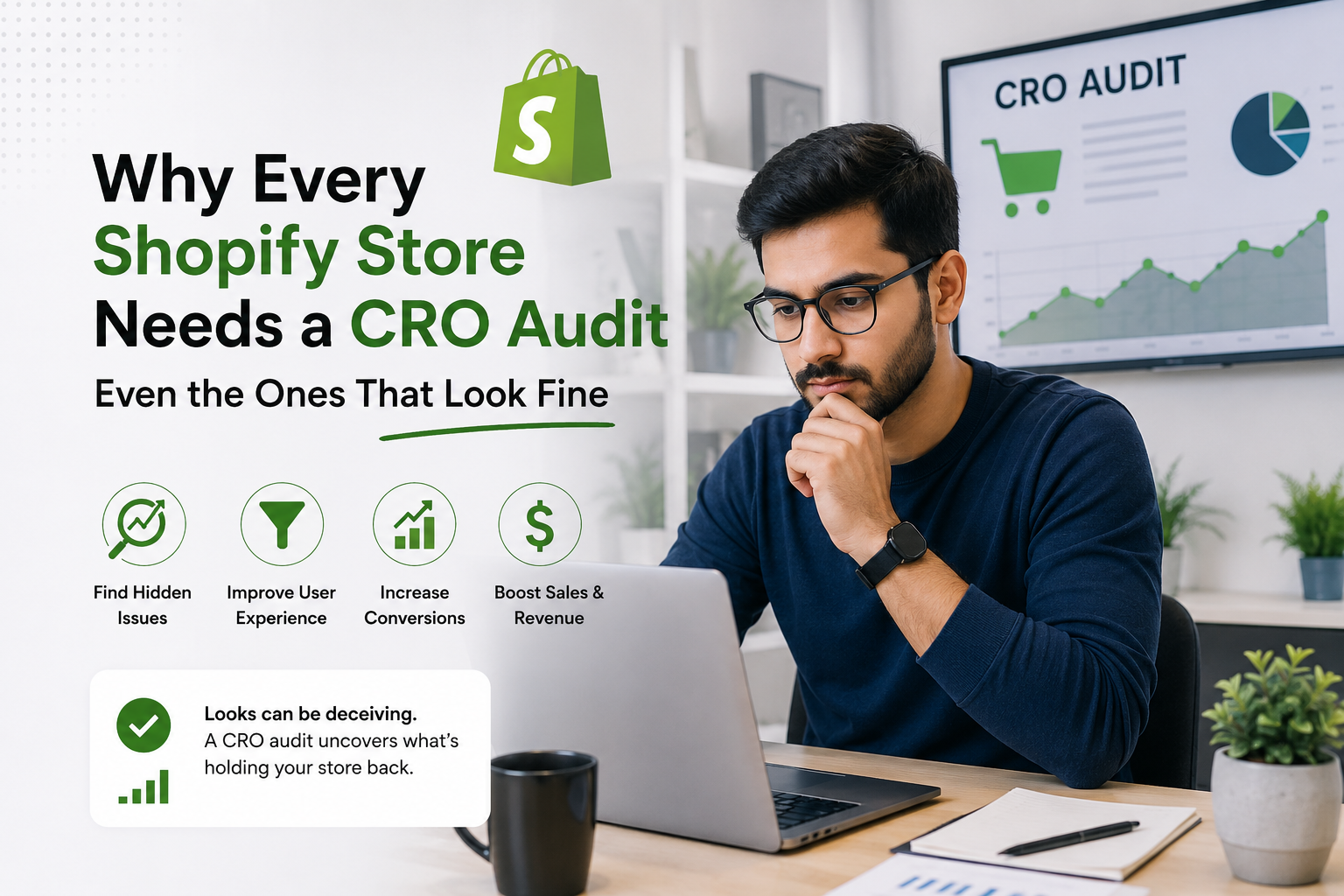
Many Shopify store owners assume that a clean design and steady sales mean everything is working well. In reality, even high-performing stores can have hidden conversion barriers that quietly reduce revenue. A Conversion Rate Optimisation (CRO) audit uncovers issues such as confusing navigation, slow-loading pages, weak product pages, ineffective calls-to-action, and a complicated checkout process. By identifying and fixing these friction points, businesses can improve the shopping experience, increase customer trust, and convert more visitors into paying customers, without spending more on advertising. A CRO audit ensures your Shopify store isn't just attracting traffic but turning that traffic into consistent, profitable growth.
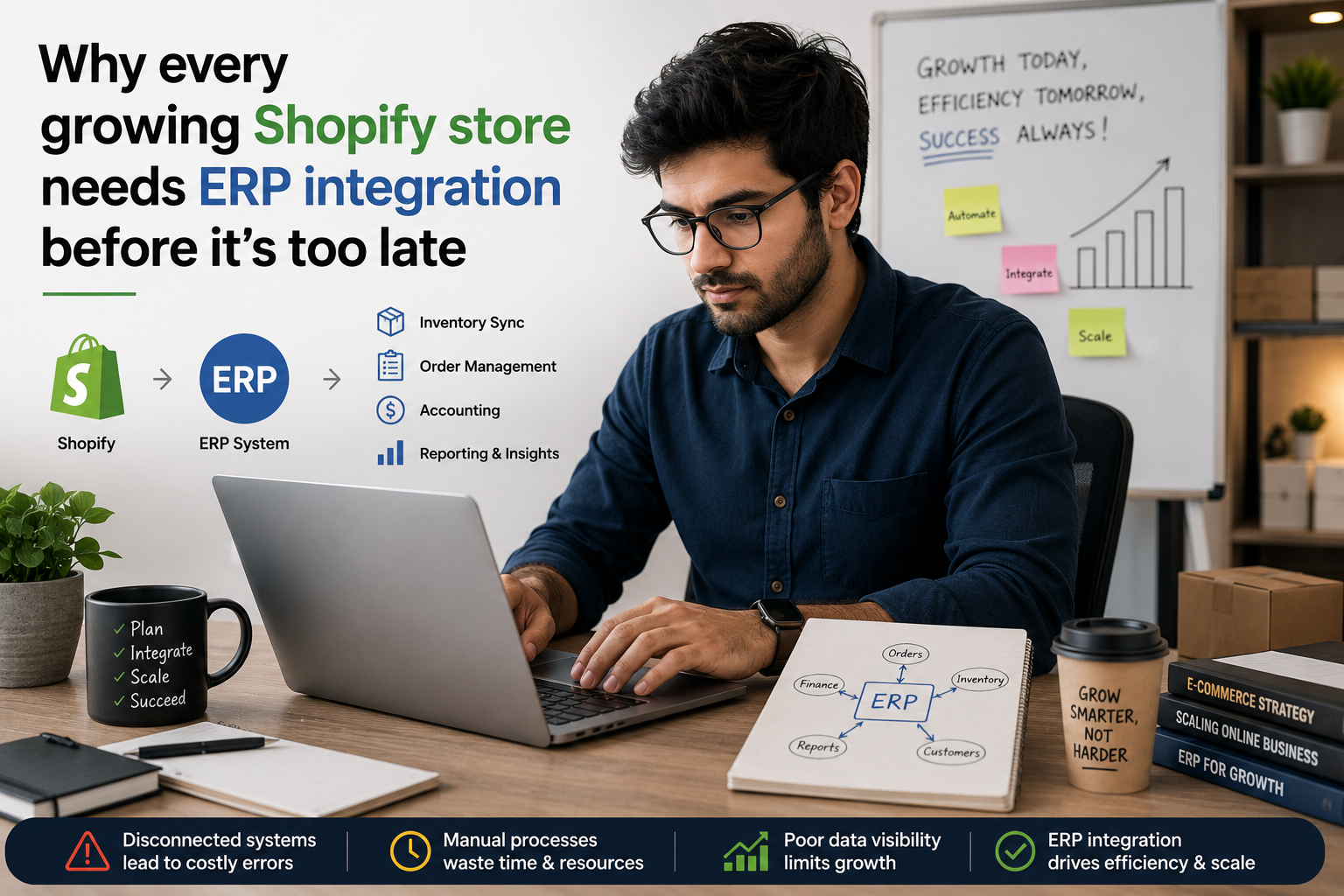
As your Shopify store grows, managing inventory, orders, accounting, and customer data across multiple systems becomes increasingly difficult. ERP integration connects these processes into one centralized platform, reducing manual work, preventing costly errors, and providing real-time business insights. By integrating ERP before operational challenges escalate, businesses can improve efficiency, scale confidently, and deliver a seamless customer experience while staying competitive in a fast-moving eCommerce market.
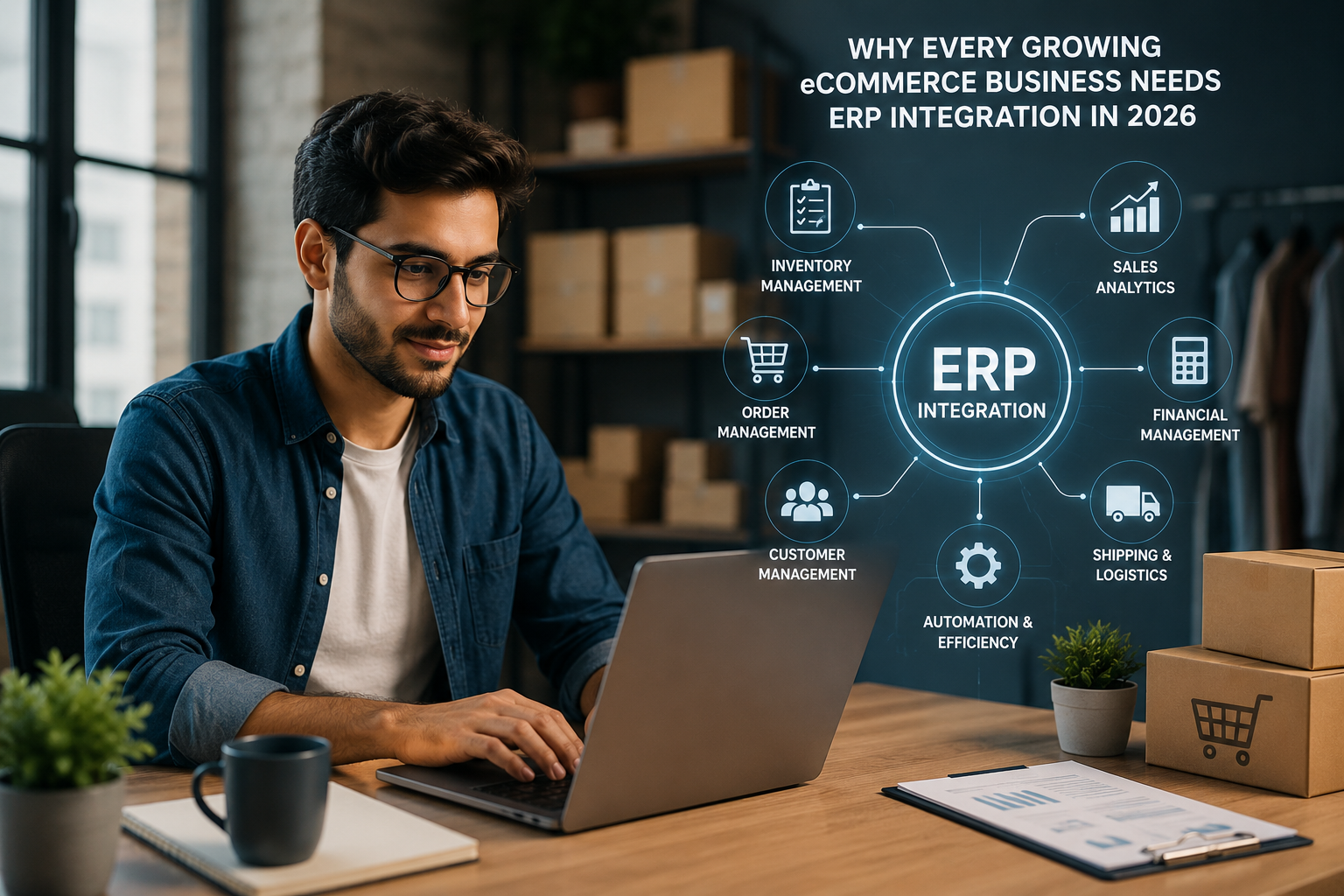
As your eCommerce business grows, managing orders, inventory, accounting, and customer data manually becomes increasingly complex. In this blog, you'll discover why ERP integration is essential in 2026, how it eliminates manual processes, improves operational efficiency, provides real-time business insights, and helps growing businesses scale faster with fewer errors and better customer experiences.
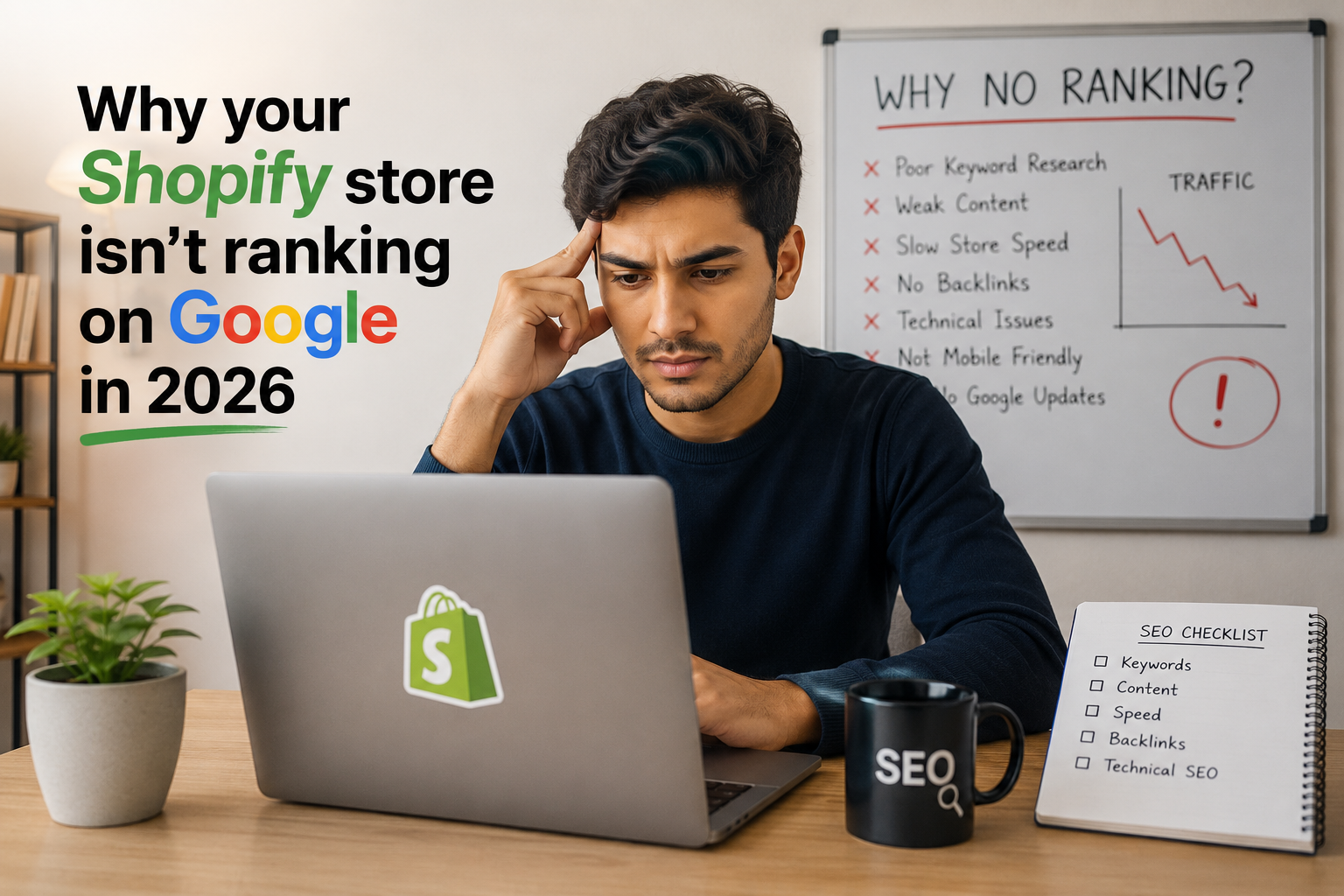
In 2026, ranking a Shopify store on Google requires more than just launching an online store. Factors like technical SEO, high-quality content, site speed, mobile optimization, user experience, and Google's evolving search algorithms all play a critical role. This guide explores the most common reasons your Shopify store isn't ranking and provides practical strategies to improve your search visibility and drive more organic traffic.
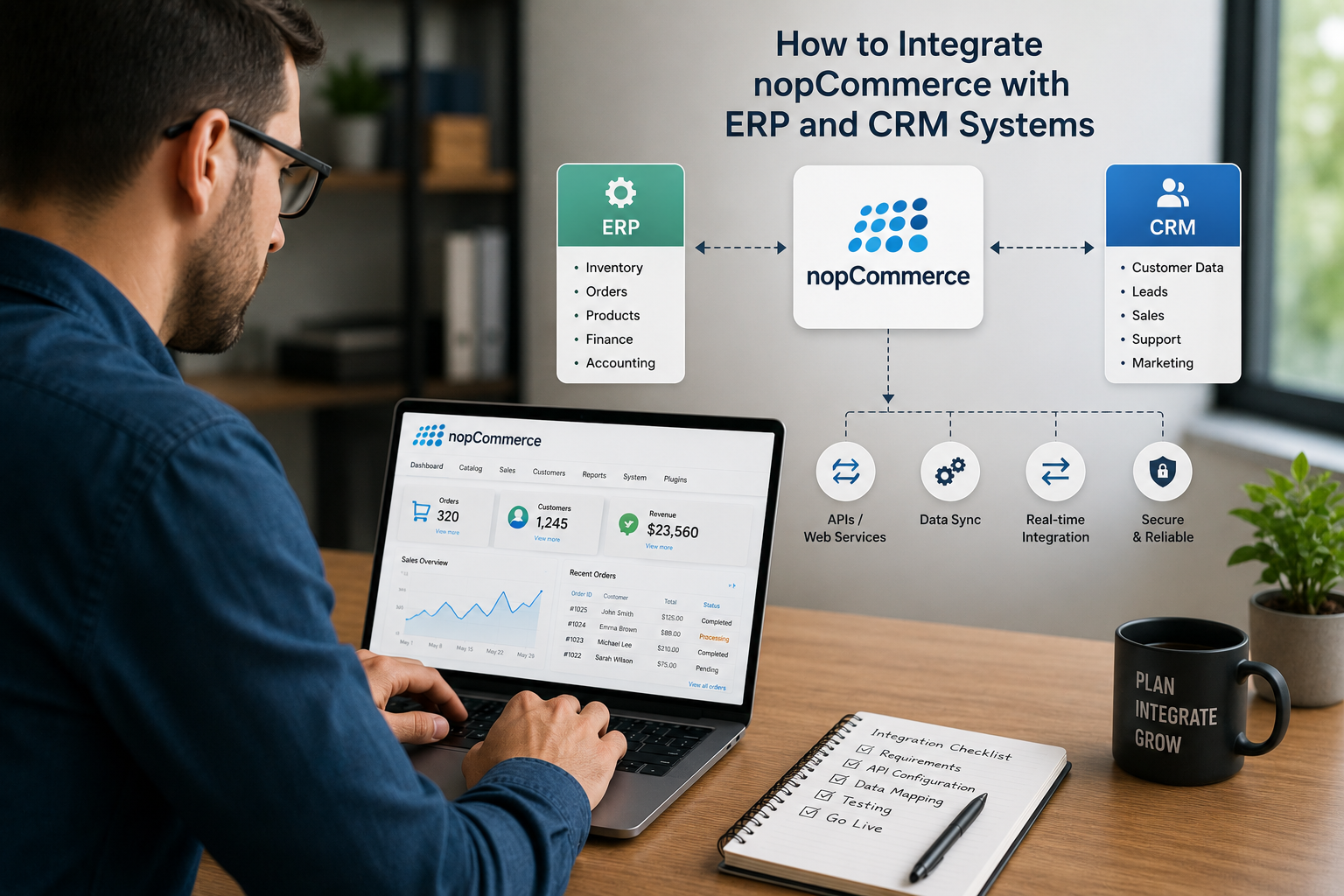
Running nopCommerce without a tight ERP and CRM connection means double data entry, mismatched inventory, and orders that fall through the cracks between your storefront and back office. Integrating nopCommerce with your ERP and CRM systems closes that gap — syncing product, inventory, order, and customer data in real time so your sales, fulfillment, and support teams are always working off the same source of truth. In this guide, we'll walk through the integration approaches, common challenges, and best practices for connecting nopCommerce to ERP and CRM platforms, along with a real client example of how this kind of integration translates into measurable business results.